Soft Tissue & Joint Injections (PRP)
- Home
- Soft Tissue & Joint Injections (PRP)
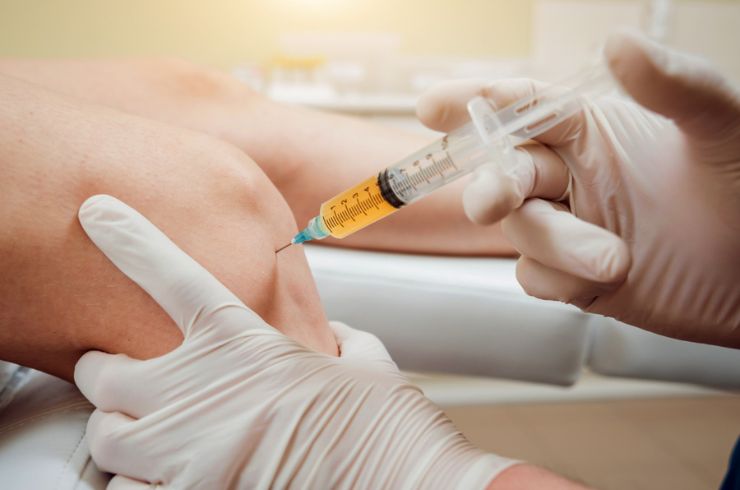
Platelet-Rich Plasma (PRP) injections are a regenerative therapy used to treat soft tissue injuries and joint pain. PRP therapy involves the injection of a concentrated solution of your own platelets into a damaged area to promote healing, reduce inflammation, and stimulate tissue regeneration.
What Is It?
PRP therapy involves drawing a small amount of your blood, processing it in a centrifuge to concentrate the platelets, and then injecting this concentrated solution directly into the injured or painful area. The platelets contain growth factors that help accelerate healing and reduce inflammation, making PRP a popular choice for treating both soft tissue injuries and joint conditions.
Why It Is Done:
- To treat soft tissue injuries, such as ligament, tendon, or muscle strains.
- To manage chronic conditions like osteoarthritis or tendinitis.
- To promote healing in injured or inflamed joints, tendons, and ligaments.
- For faster recovery after certain surgeries or injuries by promoting tissue regeneration.
- To reduce pain and inflammation in conditions like rotator cuff injuries, tennis elbow, Achilles tendonitis, and knee osteoarthritis.
How It Works:
- Blood Collection: A small sample of your blood is drawn, similar to a routine blood test.
- Centrifugation: The blood is processed in a centrifuge, which separates the platelets from other blood components, concentrating them into a plasma solution.
- Injection: The PRP is injected directly into the damaged or painful area, such as a joint or soft tissue. This is typically done using ultrasound guidance to ensure precise placement of the injection.
- Healing: Once injected, the growth factors in the PRP stimulate the body’s natural healing process, accelerating tissue repair and reducing inflammation.
Benefits:
- Minimally Invasive: PRP therapy is less invasive than traditional surgeries, with minimal downtime.
- Faster Recovery: By stimulating the body’s natural healing abilities, PRP can lead to faster recovery from injuries and conditions.
- Pain Reduction: It can significantly reduce pain and inflammation in injured joints or soft tissues.
- Long-Lasting Effects: Many patients experience long-term relief and improvement in function, reducing the need for long-term pain medications or invasive procedures.
Risks:
- Injection Site Discomfort: Mild pain or swelling at the injection site may occur after the procedure.
- Infection: As with any injection, there is a small risk of infection.
- Ineffectiveness: Some patients may not experience the desired improvement, especially in cases of severe injury or advanced disease.
Aftercare:
- Patients may need to rest the treated area for a few days after the injection to allow for healing.
- Avoiding strenuous activities or heavy exercise for a period of time will help the healing process.
- Follow-up appointments will be scheduled to assess progress and determine if additional treatments are needed.
Interventions Offered
- Ultrasound-Guided FNAC/Biopsy
- Percutaneous Drainage Procedures
- Soft Tissue & Joint Injections (PRP)
- Spinal Infiltrations
- Nerve Blocks for Pain Management
- Trans Arterial Micro Embolization (TAME)
- PTBD & Biliary Stenting
- PCN & Ureteral Stenting
- Bronchial Artery Embolization for Hemoptysis
- Prostatic Artery Embolization for BPH
- Uterine Artery Embolization for Fibroids
- Varicocele Embolization
- Genicular Artery Embolization for Knee Osteoarthritis
- TACE / TARE for Liver Cancer Treatment
- Thyroid Nodule & Tumor Ablation
- Transjugular Intrahepatic Portosystemic Shunt (TIPS)
- EVLA (Endovenous Laser Ablation) & Sclerotherapy for Varicose Veins
- Thromboaspiration & Catheter-Directed Thrombolysis (CDT) for DVT & Pulmonary Thromboembolism
- Management of Peripheral Artery Disease (PAD)