Spinal Infiltrations
- Home
- Spinal Infiltrations
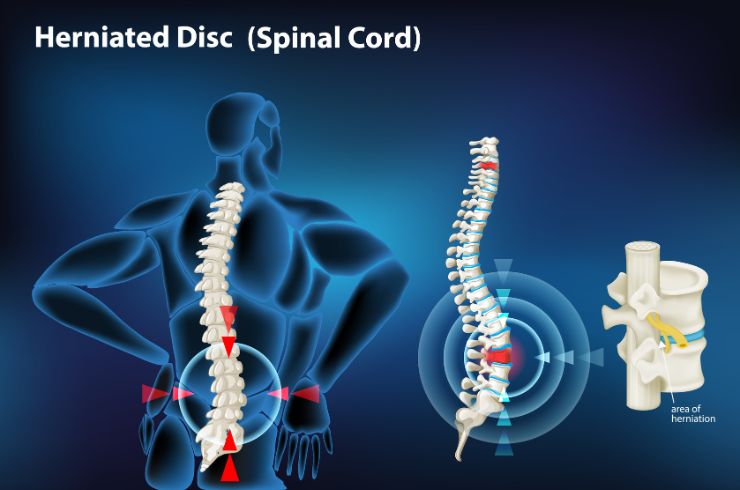
Spinal infiltrations are a minimally invasive treatment option designed to manage pain caused by conditions like disc herniation and facet arthropathy. These procedures involve the injection of medication directly into the affected area of the spine to reduce inflammation, alleviate pain, and improve mobility.
What Is It?
Spinal infiltrations involve injecting a combination of local anesthetics, steroids, or other medications directly into the spine or surrounding structures. The injection targets the affected nerve roots, facet joints, or discs, providing relief from pain and inflammation. It is primarily used for conditions such as:
- Disc Herniation: A condition where the soft center of a spinal disc bulges out, pressing on nearby nerves, causing pain, numbness, or weakness.
- Facet Arthropathy: A degenerative condition affecting the small joints (facet joints) in the spine, causing pain and stiffness, especially in the neck or lower back.
Why It Is Done:
- To manage chronic back pain or neck pain caused by disc herniation or facet joint degeneration.
- To reduce inflammation and swelling around the nerves that can lead to radiating pain in the arms, legs, or back.
- To provide relief from pain that has not responded well to physical therapy, medications, or other conservative treatments.
- To improve mobility and function in patients suffering from degenerative spine conditions.
How It Works:
- Preparation: The patient is positioned comfortably, and the area of injection is sterilized. A local anesthetic is applied to numb the injection site.
- Procedure: Using imaging guidance such as X-ray or fluoroscopy, the doctor carefully inserts a needle into the targeted area of the spine. The medication is injected directly into the disc or facet joint, where it can reduce inflammation and provide pain relief.
- Post-procedure: The procedure is typically quick, and most patients can return home the same day. In some cases, the effects of the injection may be felt immediately, while others may take a few days to notice relief.
Benefits:
- Minimally Invasive: Spinal infiltrations are performed through small needle injections, avoiding the need for invasive surgery.
- Pain Relief: The injections can provide significant relief from pain, helping patients return to daily activities with improved comfort.
- Reduced Inflammation: By targeting the inflammation at its source, spinal infiltrations help reduce swelling around the nerves and joints.
- Improved Mobility: Many patients experience a significant improvement in mobility, allowing for better flexibility and function in the spine.
Risks:
- Injection Site Discomfort: Mild pain or swelling at the injection site is common.
- Infection: Although rare, there is a small risk of infection at the injection site.
Aftercare:
- Patients may be advised to rest for a short period after the procedure and avoid strenuous activity.
- Ice or heat can be applied to the injection site if any discomfort arises.
- Follow-up appointments will be scheduled to assess the effectiveness of the treatment and determine if additional injections or alternative treatments are needed.
Interventions Offered
- Ultrasound-Guided FNAC/Biopsy
- Percutaneous Drainage Procedures
- Soft Tissue & Joint Injections (PRP)
- Spinal Infiltrations
- Nerve Blocks for Pain Management
- Trans Arterial Micro Embolization (TAME)
- PTBD & Biliary Stenting
- PCN & Ureteral Stenting
- Bronchial Artery Embolization for Hemoptysis
- Prostatic Artery Embolization for BPH
- Uterine Artery Embolization for Fibroids
- Varicocele Embolization
- Genicular Artery Embolization for Knee Osteoarthritis
- TACE / TARE for Liver Cancer Treatment
- Thyroid Nodule & Tumor Ablation
- Transjugular Intrahepatic Portosystemic Shunt (TIPS)
- EVLA (Endovenous Laser Ablation) & Sclerotherapy for Varicose Veins
- Thromboaspiration & Catheter-Directed Thrombolysis (CDT) for DVT & Pulmonary Thromboembolism
- Management of Peripheral Artery Disease (PAD)